
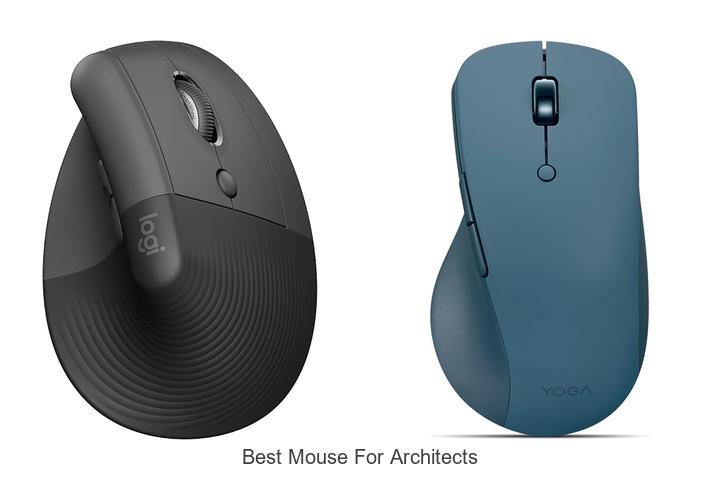
Precision, ergonomic design, programmable buttons, and high DPI sensitivity are crucial factors that significantly impact the workflow of professionals engaged in architectural design. For architects, where accuracy and efficiency in navigating complex CAD software, 3D modeling applications, and detailed blueprints are paramount, selecting the best mouse for architects can make a profound difference.
The right input device not only enhances productivity but also reduces strain during long hours of meticulous drafting and rendering. Given the specialized demands inherent in architectural tasks, a standard mouse often falls short in delivering the responsiveness and customization required. Exploring the nuanced features that distinguish the best mouse for architects reveals insightful considerations that go beyond mere specifications.
To uncover what sets these devices apart and how they align with architectural needs, continue reading the full article.
Precision Meets Comfort: Top Picks for Design Professionals
| Image | Product | Price |
|---|---|---|
Our Picks 1  | Logitech Lift Vertical Ergonomic Wireless Mouse | Check Price On Amazon |
Our Picks 2  | Lenovo Yoga Pro Bluetooth Rechargeable Ergonomic Mouse | Check Price On Amazon |
Our Picks 3  | Logitech MX Vertical Wireless Mouse Graphite | Check Price On Amazon |
1. Logitech Lift Vertical Ergonomic Wireless Mouse
Discover the Logitech Lift Vertical Ergonomic Wireless Mouse, expertly crafted to enhance comfort and productivity for professionals who value ergonomic design. Its unique vertical shape supports a natural wrist posture, making it an ideal choice for those seeking the best mouse for architects and individuals working long hours at their desks.
The Lift mouse features a softly textured grip and a snug thumb rest, promoting all-day comfort with 57 degrees of ergonomic tilt. Equipped with whisper-quiet clicks, customizable buttons, and a SmartWheel for smooth scrolling, it seamlessly connects via Bluetooth or USB across multiple platforms, boasting up to two years of battery life.
Pros
- Ergonomic vertical design reduces wrist strain and enhances natural forearm posture
- Multi-device compatibility with Bluetooth Low Energy and Logi Bolt USB connection
- Long-lasting battery life of up to 24 months for uninterrupted workflow
Cons
- Designed specifically for right-handed users; not suitable for left-handed individuals
Combining advanced ergonomic features with versatile connectivity, the Logitech Lift Vertical Ergonomic Wireless Mouse stands out as a premium tool for architects and professionals alike, promoting comfort without sacrificing functionality or style.
2. Lenovo Yoga Pro Bluetooth Rechargeable Ergonomic Mouse
Discover unparalleled comfort and precision with the Lenovo Yoga Pro Bluetooth Rechargeable Ergonomic Mouse, expertly crafted to enhance productivity for architects and creative professionals. Its ergonomic design and advanced Bluetooth connectivity make it a reliable companion for long hours of detailed work.
The Yoga Pro offers a full-sized, symmetrical shape featuring soft side grips and a dedicated thumb rest for balanced control. Equipped with programmable buttons, silent clicks, and a configurable scroll wheel, it adapts seamlessly to your workflow. Its blue optical sensor supports multi-surface tracking, while adjustable DPI settings up to 4000 ensure pinpoint accuracy across tasks.
Pros
- Ergonomic full-sized design provides lasting comfort during extended use
- Rechargeable battery with up to 3 months of life on a single 2-hour charge
- Bluetooth 5.1 dual-host pairing facilitates quick switching between multiple devices
Cons
- Lacks customizable RGB lighting found in some competitor models
Overall, the Lenovo Yoga Pro Bluetooth Mouse combines ergonomic comfort with versatile performance, making it an excellent choice for architects who demand precision without compromising on ease of use. Compared to similar mice in its price range, it offers superior battery life and adaptable tracking technology.
3. Logitech MX Vertical Wireless Mouse Graphite
Experience comfort and precision like never before with the Logitech MX Vertical Wireless Mouse Graphite. Engineered to promote natural wrist posture, this ergonomic mouse significantly reduces muscular strain, making it an ideal choice for architects and design professionals who work long hours at their desktops.
Designed with a unique 57° vertical angle and textured rubber surface, the MX Vertical ensures a relaxed handshake position that improves wrist posture without compromising performance. Its advanced 4000 DPI optical sensor delivers high precision cursor control, reducing hand movement and fatigue, supported by seamless wireless connectivity and compatibility across multiple operating systems.
Pros
- Ergonomically designed 57° vertical angle lowers wrist pressure and improves posture.
- High-precision 4000 DPI sensor reduces hand movement by up to 4 times compared to standard mice.
- Wireless functionality with USB receiver and multi-device compatibility (Windows, macOS, iPadOS, Linux, Android).
Cons
- Right-hand orientation only, limiting use for left-handed users.
The Logitech MX Vertical Wireless Mouse in Graphite stands out as a thoughtfully designed ergonomic solution tailored for professionals seeking both comfort and accuracy. Its balance of advanced tracking and wrist-friendly design makes it a leading option among premium ergonomic mice.
4. Nulea M501 Wireless Trackball Mouse

Discover seamless precision and ergonomic comfort with the Nulea M501 Wireless Trackball Mouse, crafted to elevate your workflow. Its innovative design minimizes wrist movement, making it an excellent choice for professionals seeking efficiency and comfort, especially in tight or cluttered workspaces.
Equipped with an adjustable DPI trackball for pinpoint accuracy, this mouse offers true wireless freedom by connecting to up to three devices via Bluetooth or USB dongle. The rechargeable battery ensures long-lasting use without the hassle of frequent replacements, while six thoughtfully arranged buttons enhance productivity.
Pros
- Ergonomic thumb-controlled trackball reduces muscle strain during extended use
- Multi-device connectivity via Bluetooth and 2.4G USB receiver with easy switching
- Rechargeable battery eliminates the need for disposable cells, supporting sustainable use
Cons
- Buttons are not programmable, limiting customization options for advanced users
Combining precision, comfort, and versatility, the Nulea M501 stands out as a practical solution for architects and professionals alike. Its ergonomic design and multi-device support provide a competitive advantage over traditional mice, promising enhanced productivity and reduced strain throughout the workday.
5. Logitech M185 Wireless Mouse Swift Grey

Experience reliable wireless performance with the Logitech M185 Wireless Mouse Swift Grey, designed to elevate your productivity whether you’re working at the office or on the go. Its compact, ambidextrous design provides comfort and precision, making it an excellent accessory for architects and professionals alike.
Offering up to one year of battery life and a smooth optical sensor, this USB wireless mouse ensures a strong connection up to 33 feet with a nano receiver. Compatible with Windows and Mac systems, it features a contoured shape for ergonomic control and integrates eco-conscious recycled materials in its design.
Pros
- Ambidextrous, comfortable design suited for both right- and left-handed use
- Long-lasting battery life of up to 12 months with energy-saving sleep mode
- Plug-and-play simplicity with a reliable nano USB receiver for stable wireless connectivity
Cons
- Limited buttons (single-button design) may restrict advanced shortcut customization
The Logitech M185 Wireless Mouse Swift Grey offers an ideal balance of comfort, durability, and seamless compatibility. For architects seeking efficient workflow tools beyond the traditional touchpad, this mouse stands out as a dependable, eco-friendly choice at an accessible price point.
6. Logitech Signature M650 Wireless Mouse Black

Discover precision and comfort seamlessly combined in the Logitech Signature M650 Wireless Mouse Black. Designed for professional work and daily use alike, it delivers superior scrolling control and ergonomic support, making it an ideal choice for architects and anyone needing reliable, quiet performance.
Featuring Logitech’s SmartWheel for quick toggling between line-by-line and rapid scrolling, this mouse ensures efficient navigation through lengthy documents and web pages. Its contoured shape with soft thumb support and rubber grips promotes extended comfort, while versatile connectivity options like Bluetooth Low Energy and Logi Bolt USB receiver guarantee effortless pairing.
Pros
- Quiet operation with SilentTouch technology, reducing click noise by 90% for focused environments
- Long-lasting 24-month battery life powered by a single included AA battery
- Customizable side buttons via Logitech Options+ to streamline workflow with shortcuts
Cons
- Right-handed design limits usability for left-handed users without left-handed model option
Combining ergonomic excellence with smart features, the Logitech Signature M650 is an outstanding wireless mouse that boosts productivity and comfort for architects and professionals. When compared to similar models, it stands out for its silent clicks and extensive battery life, making it a reliable and cost-effective tool for everyday use.
7. ProtoArc EM11 NL Wireless Ergonomic Vertical Mouse

Discover the ProtoArc EM11 NL Wireless Ergonomic Vertical Mouse, expertly designed to reduce wrist strain and boost productivity. Tailored for small to medium hands, this mouse offers a natural grip, multi-device connectivity, and customizable precision, making it an excellent choice for architects and professionals seeking comfort during long work sessions.
Featuring dual Bluetooth and 4G USB-A connections, the EM11 NL supports simultaneous use with up to three devices. Its ergonomic vertical design encourages a relaxed wrist posture, while adjustable DPI settings enhance tracking accuracy. With a rechargeable battery and quiet clicking, it blends performance with convenience for everyday use.
Pros
- Ergonomic vertical design reduces wrist strain, ideal for small to medium hands
- Supports connection to three devices simultaneously via Bluetooth and USB-A receiver
- Adjustable DPI levels (1000/1600/2400) enable precise cursor control for detailed work
Cons
- Learning curve required to adapt to the vertical grip, may take 1-2 weeks
Combining ergonomic comfort with versatile connectivity, the ProtoArc EM11 NL Vertical Mouse offers an effective solution to reduce repetitive strain and enhance workflow. For users seeking a professional-grade mouse designed with health and efficiency in mind, this model stands out as a cost-effective option among the best ergonomic mice available.
8. Logitech MX Master 4 for Mac Bluetooth Mouse

Experience unparalleled precision and comfort tailored for Mac users with the Logitech MX Master 4 for Mac Bluetooth Mouse. Designed to seamlessly complement your Apple setup, this mouse delivers advanced functionality and ergonomic design, perfect for architects and creative professionals seeking efficiency and style.
Engineered with macOS compatibility, the MX Master 4 features a customizable Haptic Sense Panel that provides tactile feedback for enhanced productivity. Effortlessly navigate with the MagSpeed scroll wheel, scroll 1,000 lines per second, and enjoy quiet, ergonomic clicks that reduce hand fatigue during long sessions.
The rechargeable battery includes sustainable materials, ensuring it’s both durable and eco-friendly.
Pros
- Seamless integration with macOS and Apple finishes for a cohesive aesthetic.
- Highly precise MagSpeed scroll wheel allowing ultra-fast and silent scrolling.
- Customizable Haptic Sense Panel and Actions Ring to streamline app-specific workflows.
Cons
- USB-C charging cable is not included, requiring a separate purchase.
The Logitech MX Master 4 for Mac stands out as the best mouse for architects and creatives who prioritize accuracy, comfort, and eco-conscious craftsmanship. Its innovative features and seamless Mac compatibility provide excellent value, outperforming many competitors in precision and user experience.
9. Logitech Signature M650 L Wireless Mouse Black
Experience precision and comfort like never before with the Logitech Signature M650 L Wireless Mouse Black. Designed to enhance productivity, this mouse offers smooth scrolling, quiet clicks, and a snug fit—perfect for professionals seeking reliable tools to improve workflow.
Equipped with SmartWheel technology, the Signature M650 allows effortless switching between line-by-line accuracy and rapid scrolling. Its ergonomic design includes soft thumb rests and rubber grips, supporting extended use while reducing strain. Connect seamlessly via Bluetooth or USB receiver, enjoying broad device compatibility.
Pros
- Ergonomic shape with rubber side grips for enhanced comfort during long hours
- SilentTouch technology reduces click noise by up to 90%, promoting a quiet workspace
- Versatile connectivity options including Bluetooth Low Energy and Logi Bolt USB receiver
Cons
- Right-handed design only, limiting choice for left-handed users
The Logitech Signature M650 L stands out as a top choice for professionals requiring precision and comfort in daily tasks, making it an excellent investment for architects and creative users alike. Compared to other wireless mice, it balances quiet operation, ergonomic design, and a long battery life of up to two years.
10. Lekvey Ergonomic Rechargeable Vertical Wireless Mouse

Experience optimal comfort and efficiency with the Lekvey Ergonomic Rechargeable Vertical Wireless Mouse, designed to promote healthier hand and wrist positions. Its sleek design and vibrant color options make it a stylish yet practical choice for architects, designers, and professionals who spend long hours at their workstation.
Featuring a scientific ergonomic vertical design, this mouse encourages a natural handshake grip to reduce wrist strain. It boasts a high-capacity rechargeable battery supporting up to 150 hours of use after just 3 hours of charging.
Pros
- Ergonomic vertical design minimizes wrist pain during extended use
- Long-lasting rechargeable battery eliminates the need for replacements
- Adjustable DPI (800/1200/1600) enhances precision for detailed architectural work
Cons
- May feel bulky for users with smaller hands due to larger-than-traditional dimensions
Overall, the Lekvey Ergonomic Vertical Wireless Mouse combines health-conscious design with practical features, making it an excellent investment for architects seeking comfort and accuracy. When compared to traditional mice, its vertical style and battery convenience set it apart as a superior tool for reducing repetitive strain.
Top Picks and Expert Tips for Choosing the Best Mouse for Architects
Ergonomics and Comfort
Grip style compatibility. Weight and size considerations. Wrist support and hand fatigue prevention.Ensuring a device easily pairs with various systems and allows for seamless connection options can greatly impact workflow efficiency. Many professionals rely on multiple devices and interfaces, so having flexible ports and wireless capabilities supports a clutter-free workspace and smooth integration. Additionally, the ability to add supplementary components or upgrade features provides adaptability as project demands evolve, helping maintain long-term usability without frequent replacements or compromises.
Additionally, the ability to add supplementary components or upgrade features provides adaptability as project demands evolve, helping maintain long-term usability without frequent replacements or compromises.
Precision and Sensitivity
DPI (dots per inch) range and adjustability. Sensor type (optical vs. laser). Tracking accuracy on different surfaces.Having multiple options for connecting a device to your computer ensures seamless workflow, whether through wired USB connections or wireless technologies like Bluetooth or RF. A reliable link reduces lag and interference, which is crucial for detailed architectural work.
Equally important is the ability to add or customize features such as extra programmable buttons or ergonomic attachments, which can enhance comfort and productivity during long design sessions. Some models offer customizable profiles or allow integration with other peripherals, providing a tailored user experience that adapts to specific project needs.
- Wired vs. wireless options: Wired connections tend to offer consistent performance without battery concerns, while wireless options provide freedom of movement and a cleaner workspace.
- Port availability: Devices that support multiple connection types or offer USB pass-through ports add versatility for architects who use various tools simultaneously.
- Expandable features: The ability to program buttons or update firmware ensures the device remains adaptable as software and workflow requirements evolve.
Programmable Buttons and Customization
Number of customizable buttons. Software compatibility for macros and shortcuts. Button placement for efficiency.Design professionals often rely on precision and efficiency, which makes the number of customizable buttons a crucial feature to evaluate. A device offering multiple programmable buttons allows users to assign essential macros and shortcuts directly, saving valuable time during complex projects.
Equally important is compatibility with reliable software that supports easy customization, enabling architects to tailor the functions according to their unique workflow. Button placement also plays a vital role, as ergonomically positioned controls reduce hand strain and ensure that commands can be accessed quickly without interrupting the creative process.
Connectivity Options
Wired vs. wireless performance. Battery life and charging methods. Bluetooth and USB receiver compatibility.Understanding the connection type and device compatibility plays a crucial role in the efficiency and convenience of a mouse designed for architecture professionals. A wired connection often ensures a stable and lag-free performance, which is essential for precision tasks, while wireless models offer greater freedom of movement at the potential cost of occasional input delay. Battery life is another significant factor; longer-lasting batteries reduce interruptions during lengthy design sessions, and various charging methods—such as USB-C fast charging or replaceable batteries—can contribute to uninterrupted workflow. Additionally, compatibility with Bluetooth or USB receivers affects how seamlessly the device integrates with different systems, offering flexibility whether working on desktops, laptops, or multiple devices.
Durability and Build Quality
Material and build robustness. Button lifespan and switch quality. Dust and water resistance features.The way a mouse interfaces with your devices plays a crucial role in ensuring smooth and efficient workflow, especially for professionals handling intricate designs and frequent file transfers. Having multiple connection options such as USB, Bluetooth, or wireless receivers can provide flexibility across different workstations or on-the-go scenarios.
Additionally, the ability to add peripherals or upgrade the device with extra buttons, customizable weights, or additional dongles can significantly enhance productivity by tailoring the tool to specific architectural tasks.
- Compatibility with various operating systems and hardware setups to avoid interruptions.
- Availability of ports or wireless channels that reduce latency and increase responsiveness.
- Expandable features allowing more control options or ergonomic adjustments without needing a full replacement.
Price and Brand Reputation
Budget vs. premium models. Warranty and customer support. Reviews and user feedback from professionals.Devices that offer versatile connection options such as Bluetooth, USB, or wireless dongles ensure seamless integration with various workstations, which is essential for architects who often switch between devices or prefer clutter-free setups. Additionally, having the ability to easily add extra buttons, customize weights, or upgrade components can significantly enhance productivity and comfort during long design sessions. Without these features, users might find themselves limited by compatibility issues or stuck with a static device that doesn’t adapt to evolving needs.
Price and brand reputation play a crucial role in determining the overall value of such tools. Comparing budget-friendly models against premium ones reveals differences not just in build quality but also in after-sales support and advanced functionalities.
| Aspect | Budget Models | Premium Models |
|---|---|---|
| Build Quality | Basic materials, less durability | High-grade materials, enhanced longevity |
| Features | Limited customization options | Advanced programmable buttons, ergonomic adjustments |
| Warranty & Support | Shorter warranty, basic support | Extended warranty, prioritized customer care |
| User Feedback | Mixed reviews, occasional complaints about reliability | Consistently positive from industry professionals |
Reading detailed reviews and user experiences from architects and design experts sheds light on real-world performance and long-term satisfaction. A reputable brand with strong customer support often backs premium models, offering peace of mind and assistance that budget alternatives may lack.
FAQ’s
What Features Should Architects Look For In A Mouse?Architects should look for a mouse with high precision and customizable buttons to enhance accuracy and efficiency in design work. Ergonomic design is also important to ensure comfort during long hours of use.
Which Mouse Offers The Best Precision For Architectural Design Work?The Logitech MX Master 3S offers the best precision for architectural design work with its high-accuracy sensor and customizable buttons. Its ergonomic design also ensures comfortable long-term use during detailed projects.
Are There Any Ergonomic Mice Recommended For Architects Who Work Long Hours?Yes, ergonomic mice like the Logitech MX Master 3 and the Anker Ergonomic Vertical Mouse are highly recommended for architects who work long hours, as they reduce wrist strain and improve comfort. These mice offer customizable buttons and precise control, which can enhance productivity during detailed design work.
How Does A Wireless Mouse Compare To A Wired Mouse For Architects?A wireless mouse offers architects greater mobility and a clutter-free workspace, enhancing comfort during long design sessions. However, a wired mouse provides more reliable connectivity and consistent responsiveness, which can be crucial for precise drafting and detailed work.
What Are The Top Brands Offering Mice Specifically Suited For Architecture Professionals?Top brands offering mice specifically suited for architecture professionals include Logitech, known for their precision and ergonomic design, and 3Dconnexion, which specializes in 3D navigation devices tailored for CAD applications. Both provide tools that enhance efficiency and comfort during detailed architectural work.
Conclusion
Choosing the best mouse for architects involves prioritizing precision, comfort, and customizable features. Models with high DPI settings, ergonomic designs, and programmable buttons enhance workflow efficiency in design software.

- Top Best Computer Speakers with Microphone for Clear Sound! - November 11, 2026
- Best Wired Computer Speakers That Blow Your Mind! - November 11, 2026
- Top Best External Speakers for Laptop Computers Revealed! - November 11, 2026
