
Refresh rate, response time, and input lag are critical metrics that define the performance boundary in high-stakes gaming environments. For competitive play, where milliseconds determine victory or defeat, the right display hardware becomes as vital as strategy and skill. The best gaming monitors for competitive play are engineered to optimize these parameters, delivering ultra-smooth visuals with minimal motion blur and instantaneous feedback.
The best gaming monitors for competitive play are engineered to optimize these parameters, delivering ultra-smooth visuals with minimal motion blur and instantaneous feedback. Beyond mere frame rates, factors such as panel technology, adaptive sync compatibility, and resolution impact the overall gaming experience, influencing precision and reaction times on a granular level. As eSports continues to evolve, understanding the nuances behind these specifications can elevate competitive performance.
Dive deeper to uncover which monitors truly set the benchmark for competitive gamers seeking that crucial edge.
Elevate Your Gameplay with These Top-Tier Displays Designed for Precision and Speed
| Image | Product | Price |
|---|---|---|
Our Picks 1  | Samsung Odyssey G5 27 QHD Gaming Monitor | Check Price On Amazon |
Our Picks 2  | Samsung Odyssey G5 32 QHD Monitor | Check Price On Amazon |
Our Picks 3  | Alienware AW2725DM 27-inch Gaming Monitor | Check Price On Amazon |
1. Samsung Odyssey G5 27 QHD Gaming Monitor
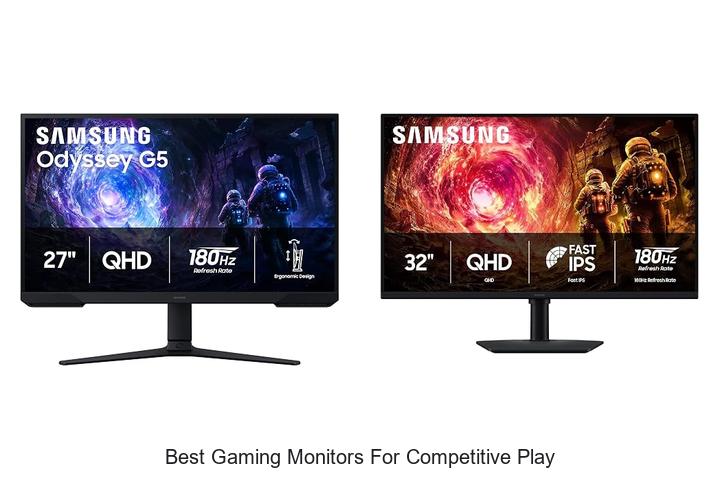
Discover unparalleled visual clarity and ultra-responsive gameplay with the Samsung Odyssey G5 27 QHD Gaming Monitor. Engineered for competitive gamers, its impressive 1440p resolution and lightning-fast 180Hz refresh rate combine to deliver smooth and vivid graphics, elevating every gaming session.
Equipped with a VA panel boasting a 3000:1 contrast ratio and HDR10 support, this monitor enriches details with deep blacks and bright highlights. The 1ms response time alongside AMD FreeSync technology ensures seamless, tear-free performance, while the ergonomic stand allows personalized comfort for extended play.
Pros
- QHD resolution (2560 x 1440) delivers crisp, detailed visuals ideal for competitive gaming.
- High 180Hz refresh rate and 1ms response time reduce motion blur and input lag for precise control.
- AMD FreeSync support minimizes screen tearing, enhancing smooth gameplay during fast action.
- Ergonomic stand with tilt, pivot, and height adjustments enhances comfort during long sessions.
- Black Equalizer feature improves visibility in dark game areas, helping to spot opponents quickly.
Cons
- Matte screen finish may slightly diffuse colors compared to glossy panels preferred by some users.
Offering a compelling blend of speed, clarity, and ergonomic design, the Samsung Odyssey G5 stands out among the best gaming monitors for competitive play. Its advanced features provide an advantage in fast-paced games, making it a smart choice compared to similar QHD monitors in this price range.
2. Samsung Odyssey G5 32 QHD Monitor
Experience unmatched clarity and responsiveness with the Samsung Odyssey G5 32 QHD Monitor, designed to elevate your competitive gaming. Its vibrant visuals and rapid performance deliver an immersive gameplay environment, allowing players to react swiftly and enjoy every detail with striking precision.
Featuring a 2560 x 1440 QHD resolution and a wide 178° viewing angle IPS panel, this monitor presents sharp and consistent colors from any viewpoint. The 180Hz refresh rate combined with a 1ms response time ensures smooth motion handling, while G-Sync compatibility minimizes screen tearing and lag for flawless gaming sessions.
Pros
- High QHD resolution delivers crystal-clear, detailed visuals for immersive gameplay.
- 180Hz refresh rate and 1ms response time enable ultra-smooth and fast reactions.
- G-Sync compatibility reduces screen tearing, lag, and choppiness during intense gaming.
Cons
- Brightness at 300 cd/m² may be less impactful in extremely bright environments.
Combining vivid visuals with advanced gaming features and ergonomic flexibility, the Samsung Odyssey G5 32 QHD stands out as a top choice among the best gaming monitors for competitive play. It balances sharp image quality and fast performance to support serious gamers’ needs effectively.
3. Alienware AW2725DM 27-inch Gaming Monitor
Elevate your competitive gaming experience with the Alienware AW2725DM 27-inch Gaming Monitor, designed to deliver stunning QHD visuals and ultra-smooth gameplay. Its advanced features cater to serious gamers seeking precision, speed, and vibrant image quality to stay ahead in every match.
Boasting a 27-inch QHD display with a 180Hz refresh rate and 1ms gray-to-gray response time, this monitor ensures fluid motion and razor-sharp detail. With 95% DCI-P3 color coverage and VESA DisplayHDR 400 certification, each frame bursts with vivid colors, while the dedicated console mode and low blue light technology support longer gaming sessions comfortably.
Pros
- High 180Hz refresh rate and 1ms response time for ultra-responsive gameplay
- 95% DCI-P3 color gamut and DisplayHDR 400 for vibrant, lifelike visuals
- Eye-friendly features like hardware-based low blue light and console mode for extended play
Cons
- Price point may be higher compared to standard gaming monitors
For competitive gamers demanding a balance of speed, clarity, and color accuracy, the Alienware AW2725DM stands out as a top-tier option. While it comes at a premium, its technical excellence justifies the investment, making it an excellent choice over conventional gaming displays.
4. Samsung Odyssey OLED G5 27 Gaming Monitor

Experience unparalleled clarity and lightning-fast responsiveness with the Samsung Odyssey OLED G5 27 Gaming Monitor. Designed for competitive gaming, this monitor delivers hyper-real visuals and silky smooth performance that can give players the edge needed for high-stakes gameplay.
Featuring a 27-inch QHD QD-OLED display, the Odyssey OLED G5 offers exceptional picture quality with vibrant colors and deep contrast. Its 180Hz refresh rate and 03ms response time enhance fast-paced action, while OLED Safeguard technology protects the screen from burn-in.
Compatibility with G-Sync and FreeSync ensures tear-free visuals, making it ideal for serious gamers.
Pros
- Stunning QD-OLED panel delivers superior color accuracy and brightness for immersive visuals.
- Ultra-fast 180Hz refresh rate combined with a 0.03ms response time ensures smooth and responsive gameplay.
- Advanced OLED Safeguard Thermal Modulation System actively prevents screen burn-in for lasting durability.
Cons
- Premium features come at a higher price point compared to standard gaming monitors.
For gamers seeking one of the best gaming monitors for competitive play, the Samsung Odyssey OLED G5 balances cutting-edge display technology and rapid response times. While slightly more expensive, its advanced features and eye-care innovations make it a valuable investment for high-performance gaming setups.
5. Acer Nitro KG271U 27in QHD Gaming Monitor

Elevate your competitive gaming setup with the Acer Nitro KG271U 27-inch QHD Gaming Monitor. Offering sharp visuals and ultra-smooth performance, it’s designed to maximize your precision and responsiveness for high-stakes gameplay.
Experience immersive details and seamless action that give you a real edge.
Featuring a 2560 x 1440 QHD IPS display with a sleek zero-frame design, this monitor delivers stunning image clarity and vibrant colors with 95% DCI-P3 coverage. Equipped with AMD FreeSync technology and a blazing 180Hz refresh rate, it ensures fluid gameplay by eliminating tearing and reducing input lag.
A 5ms gray-to-gray response time guarantees smooth transitions during fast action scenes, making it ideal for competitive play.
Pros
- High-resolution QHD display with vivid color accuracy supporting HDR 10
- AMD FreeSync eliminates screen tearing for uninterrupted gameplay
- Ultra-fast 180Hz refresh rate and 0.5ms response time reduce lag and ghosting
Cons
- Brightness peak of 250 cd/m² may be insufficient in very bright environments
Combining exceptional image quality with top-tier responsiveness, the Acer Nitro KG271U stands out among the best gaming monitors for competitive play, especially at its price point. Athletes and enthusiasts seeking a reliable, high-performance display will find it a compelling choice to enhance their gameplay experience.
6. Dell SE2426HG 24-Inch FHD 240Hz Gaming Monitor

Experience competitive gaming like never before with the Dell SE2426HG 24-Inch FHD Gaming Monitor. Designed for fast-paced action, it combines a blazing 240Hz refresh rate with precise color accuracy to elevate every match, delivering smooth visuals and rapid response times for serious gamers aiming to dominate.
Equipped with a 5ms response time and FreeSync Premium technology, the monitor eliminates screen tearing and input lag, ensuring seamless gameplay across PC and consoles. Its IPS panel offers wide 178-degree viewing angles with 99% sRGB color coverage, providing vivid and true-to-life images. TÜV Rheinland certification minimizes blue light emission, reducing eye strain during extended sessions.
TÜV Rheinland certification minimizes blue light emission, reducing eye strain during extended sessions.
Pros
- Ultra-smooth 240Hz refresh rate for fluid motion and competitive edge
- Fast 0.5ms response time with FreeSync Premium for tear-free gaming
- Rich, accurate colors via 99% sRGB coverage on a wide-view IPS panel
- Eye-comfort features with TÜV Rheinland 3-star certification reduce blue light
- Matte screen finish prevents glare, enhancing visibility in various lighting
Cons
- Basic contrast ratio (1000:1) may not deliver deep blacks compared to VA panels
The Dell SE2426HG stands out as a top contender among the best gaming monitors for competitive play, especially at its price point. Its superior refresh rate and response time balance color precision and eye comfort, making it a smart choice for gamers seeking both performance and visual quality without breaking the bank.
7. AOC Q27G4 27 QHD Gaming Monitor
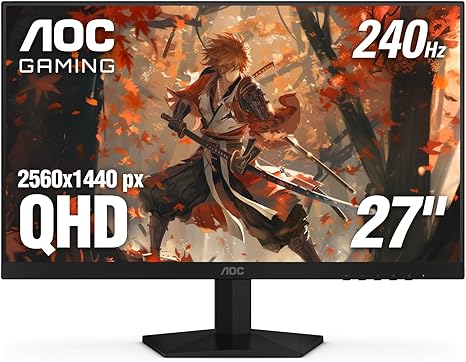
The AOC Q27G4 27 QHD Gaming Monitor redefines competitive play with its stunning 27-inch IPS display and sharp 2560×1440 Quad HD resolution. Designed for gamers who demand speed and precision, it offers an immersive experience with vivid colors and exceptional clarity.
Equipped with a rapid 240Hz refresh rate and an ultra-fast 3ms MPRT response time, the monitor ensures fluid motion and reduces blur for seamless gameplay. Adaptive-Sync compatibility minimizes screen tearing across AMD and NVIDIA GPUs, while ergonomic tilt adjustments and versatile connectivity enhance customization and setup integration.
Pros
- High-resolution 27″ QHD IPS panel delivers vibrant colors and wide viewing angles.
- 240Hz refresh rate paired with 0.3ms response time ensures ultra-smooth, blur-free gaming.
- Adaptive-Sync support prevents screen tearing and reduces input lag for better competitive performance.
Cons
- Lacks built-in speakers, requiring external audio solutions.
For gamers looking to elevate their competitive edge, the AOC Q27G4 blends speed, image quality, and responsive features into a sleek, frameless design at an attractive price point. It stands strong compared to similar monitors in its class, prioritizing performance essentials without unnecessary extras.
8. ASUS TUF Gaming VG27AQ3A Monitor

Experience an elevated level of competitive gaming with the ASUS TUF Gaming VG27AQ3A Monitor, engineered to provide crystal-clear visuals and lightning-fast response times. This 27-inch QHD display merges professional-grade specifications with innovative technologies to deliver immersive gameplay and an edge over opponents.
Designed with a Fast IPS panel featuring a 180Hz refresh rate and 1ms response time, the VG27AQ3A monitor eliminates motion blur and ghosting using ASUS’s Extreme Low Motion Blur Sync technology. Supporting FreeSync Premium, G-Sync compatibility, and HDR-10, it ensures smooth, vivid, and tear-free visuals for a seamless gaming experience.
Pros
- High-resolution QHD (2560 x 1440) display with true-to-life colors and wide 178° viewing angles powered by 130% sRGB gamut.
- Advanced synchronization technologies including FreeSync Premium and G-Sync compatibility reduce screen tearing and stuttering.
- Built-in audio speakers and included accessories like DisplayPort cable and quick start guide provide an all-in-one gaming setup.
Cons
- At $199, pricing is competitive but may still be considered premium compared to standard gaming monitors with lower refresh rates.
Blending superior image quality, rapid pixel response, and robust synchronization features, the ASUS TUF Gaming VG27AQ3A stands out as an excellent choice among the best gaming monitors for competitive play. Its balanced feature set provides value that rivals even some higher-priced models on the market.
9. Samsung Odyssey G55C 32 Curved Gaming Monitor

Immerse yourself in intense gaming sessions with the Samsung Odyssey G55C 32 Curved Gaming Monitor, designed to elevate your competitive gameplay with stunning visuals and ultra-smooth performance. Its QHD resolution and 1000R curvature create a deeply engaging experience, perfect for gamers seeking top-tier clarity and responsiveness.
Boasting a 165Hz refresh rate and a 1ms response time, this curved monitor eliminates lag and motion blur, letting you react instantly in fast-paced scenarios. Equipped with AMD FreeSync and HDR10 support, it delivers vibrant colors and tear-free graphics, ensuring every in-game detail is crisp and lifelike.
Pros
- 165Hz refresh rate coupled with 1ms (MPRT) response time for fluid, blur-free gaming action
- 1.7x higher pixel density than Full HD with QHD resolution, offering sharp and detailed visuals
- Immersive 1000R curved display that wraps the field of view, enhancing peripheral immersion
- AMD Radeon FreeSync support to synchronize graphics card and monitor refresh rates, reducing screen tearing
- Eye Saver Mode and flicker-free technology minimize eye strain during prolonged gameplay
Cons
- Glossy screen finish may reflect ambient light, potentially distracting in brightly lit environments
With its advanced specifications and user-focused features, the Samsung Odyssey G55C stands out among gaming monitors for competitive play. Offering a blend of speed, clarity, and immersive design, it’s an excellent choice for gamers who demand performance and visual excellence at a competitive price point.
10. Sceptre Curved 34-inch Prime Gaming Monitor C345B-QU240T

Discover the ultimate edge in competitive gaming with the Sceptre Curved 34-inch Prime Gaming Monitor C345B-QU240T. Designed for gamers seeking smooth visuals and seamless performance, this monitor combines a stunning 21:9 aspect ratio with cutting-edge features to elevate every gaming session and multitasking task.
Equipped with a 240Hz refresh rate and a lightning-fast 1ms response time featuring blur reduction, the monitor delivers ultra-smooth gameplay free from lag or ghosting. Its 100% sRGB color gamut ensures vibrant, true-to-life colors, while Blue-Light Shift technology protects your eyes during extended play or work. Multiple connectivity options including two HDMI and two DisplayPorts offer versatile device linking, complemented by built-in audio for a clutter-free setup.
Multiple connectivity options including two HDMI and two DisplayPorts offer versatile device linking, complemented by built-in audio for a clutter-free setup.
Pros
- Ultra-fast 240Hz refresh rate paired with 1ms response time for fluid, responsive gameplay
- Wide 34-inch curved 21:9 screen enhances immersion and multitasking capabilities
- Blue-Light Shift technology reduces eye strain during prolonged use
- Comprehensive connectivity with dual HDMI and DisplayPort inputs
- Built-in speakers and audio out jack provide flexible sound options without extra clutter
- Accurate color reproduction with 100% sRGB gamut, ideal for gaming and creative projects
Cons
- No HDR support, which might be missed by users wanting enhanced contrast and brightness levels
At a competitive price point, the Sceptre C345B-QU240T stands out among the best gaming monitors for competitive play by offering high refresh rates, wide screen immersion, and eye-friendly technology. Its feature set makes it a strong contender for gamers and professionals who demand both performance and value.
Unlock Your Edge: The Ultimate Guide to Choosing the Best Gaming Monitors for Competitive Play
Display Performance
Refresh rate and its impact on gameplay. Response time and input lag considerations. Resolution and screen size balance.High refresh rates play a crucial role in delivering smooth and fluid gameplay, which is essential for fast-paced, competitive environments. A monitor that supports rates of 144Hz or higher can significantly reduce motion blur and provide clearer visuals during rapid movements.
Balancing resolution and screen size also matters greatly. While higher resolutions offer sharper images and more detail, they require more powerful hardware to maintain high frame rates. On the other hand, a larger screen can provide better immersion but may affect how quickly you catch distant targets in competitive matches.
Finding the right combination helps maintain quick reaction times without compromising visual clarity.
| Feature | Impact | Recommended Range |
|---|---|---|
| Refresh Rate | Smoothness of motion and reducing blur | 144Hz to 240Hz |
| Response Time & Input Lag | Speed of pixel transitions and command response | < 5 ms response time |
| Resolution & Screen Size | Clarity vs. performance balance | 1080p to 1440p; 24″ to 27″ |
Panel Type and Image Quality
Differences between TN, IPS, and VA panels. Color accuracy and viewing angles. Contrast ratio and black levels.Different panel types significantly impact performance and visual experience during fast-paced gaming sessions. TN panels are known for their quick response times and low input lag, making them a popular choice for competitive gamers, but they often come with narrower viewing angles and less accurate color reproduction.
VA panels offer the best contrast ratios and deeper black levels, enhancing image depth and immersion, but their response speeds are usually between TN and IPS panels.
| Panel Type | Response Time | Color Accuracy | Viewing Angles | Contrast Ratio |
|---|---|---|---|---|
| TN | Very Fast | Moderate | Narrow | Low to Moderate |
| IPS | Moderate | High | Wide | Moderate |
| VA | Slower | Good | Moderate | High |
Choosing a screen that balances speed and image quality directly affects how clearly and comfortably competitors can track fast movements and recognize subtle visual cues, which are crucial for split-second decisions. Additionally, higher contrast ratios and better black levels help prevent washed-out scenes and improve visibility in darker game environments, enhancing overall immersion and reducing eye strain during extended play sessions.
Connectivity and Compatibility
Available input ports (HDMI, DisplayPort, USBC). Adaptive sync technologies (GSync vs FreeSync). Compatibility with gaming consoles and PCs.Having access to multiple input ports such as HDMI, DisplayPort, and USB-C ensures seamless integration with a variety of devices, from high-end gaming PCs to popular consoles. This versatility allows gamers to switch effortlessly between systems without constantly unplugging cables. Additionally, understanding the type of adaptive sync technology supported by the monitor—whether it’s G-Sync or FreeSync—can significantly reduce screen tearing and stuttering, providing a smoother and more responsive gaming experience.
Compatibility with different platforms plays a crucial role, as some monitors optimize performance better with PCs while others cater specifically to console capabilities. Ensuring these factors align with your setup helps maintain peak performance and prevents frustrating connectivity issues down the line.
Ergonomics and Design
Adjustable stands for height, tilt, and swivel. Screen curvature vs flat displays. Build quality and aesthetics.Multiple connection ports and the ability to add peripherals greatly influence the overall experience, especially in fast-paced environments where smooth hardware integration is key. Ensuring a monitor supports a wide range of inputs like HDMI, DisplayPort, and USB hubs allows seamless switching between devices and connection of essential accessories such as gaming keyboards, mice, or headphones.
Additionally, having options to expand the display setup with daisy-chaining or extra ports can enhance multitasking and immersive gameplay. Monitors that offer easy connectivity to additional screens or external devices enable competitive gamers to build a versatile environment tailored to their style and workflow. A lack of sufficient ports or limited compatibility may force inconvenient compromises or additional adapters, which can introduce lag or connection issues—both detrimental to peak performance.
| Feature | Benefit | Potential Drawback if Missing |
|---|---|---|
| Diverse Input Ports | Connect multiple devices effortlessly | Switching delays and limited device use |
| USB Hubs | Easier access to peripherals | Cluttered cables and inconvenient setup |
| Port Expansion Support | Flexibility for multi-monitor setups | Restricted workspace and limited upgrades |
Additional Features for Competitive Play
Onscreen display settings tailored for gaming. Customizable crosshair overlays and timers. Blue light filters and flickerfree technology.Modern gaming monitors often come equipped with specialized onscreen display settings designed to enhance performance during intense matches. Features like customizable crosshair overlays allow players to maintain better aiming precision, while built-in timers help track cooldowns or match durations without needing extra tools.
Additionally, technologies such as blue light filters and flickerfree screens significantly reduce eye strain during extended sessions, ensuring comfort and sustained focus over long periods.
Budget and Warranty Considerations
Price range vs features offered. Manufacturer warranty and customer support. Value for money in competitive gaming contexts.A smooth and lag-free connection to your gaming setup often hinges on having the right ports and the ability to add peripherals, which can directly impact your in-game performance. Multiple input options such as HDMI, DisplayPort, and USB hubs allow seamless compatibility with gaming consoles, PCs, and accessories like headsets or external storage drives.
Additionally, having extra slots or upgrade capabilities ensures the monitor can adapt to future hardware upgrades or specific competitive gaming needs without requiring a complete replacement.
- Support for high refresh rates and low latency interfaces to maximize responsiveness.
- Variety and number of input ports to easily connect multiple devices at once.
- Built-in USB hubs or expansion options for additional gaming peripherals.
- Compatibility with adaptive sync technologies for tear-free visuals.
Ensuring that the monitor can handle various connections and allows for peripheral additions can provide a strategic edge and prevent unnecessary downtime during intense competitive sessions.
FAQ’s
What Features Should I Look For In The Best Gaming Monitors For Competitive Play?Look for a gaming monitor with a high refresh rate (at least 144Hz), low response time (1ms), and adaptive sync technology like G-Sync or FreeSync to reduce screen tearing. Additionally, prioritize accurate color reproduction and a low input lag for a smoother, more responsive gaming experience.
How Does Refresh Rate Impact Performance In Competitive Gaming Monitors?A higher refresh rate in competitive gaming monitors results in smoother and more fluid visuals, allowing players to react faster to in-game actions. This reduces motion blur and input lag, providing a competitive edge in fast-paced gameplay.
Which Gaming Monitors Offer The Lowest Input Lag For Competitive Gaming?Gaming monitors with low input lag for competitive gaming typically include models like the ASUS ROG Swift PG259QN and the Alienware AW2521H, known for their 1ms response times and high refresh rates. These monitors prioritize speed and responsiveness to give players a competitive edge.
What Is The Ideal Screen Size And Resolution For A Competitive Gaming Monitor?The ideal screen size for a competitive gaming monitor is typically 24 to 27 inches, providing a good balance between visibility and quick eye movement. A resolution of 1080p (Full HD) is preferred for faster refresh rates and lower input lag.
Are Curved Or Flat Monitors Better Suited For Competitive Gaming?Flat monitors are generally better suited for competitive gaming due to their consistent viewing angles and minimal distortion, allowing for faster reaction times. Curved monitors can enhance immersion but may introduce slight visual inconsistencies that are less ideal in fast-paced competitive play.
Conclusion
In summary, the best gaming monitors for competitive play combine rapid refresh rates, low input lag, and high resolution to deliver an edge in fast-paced games. Features like adaptive sync technologies and ergonomic designs further enhance performance and comfort. Choosing the right monitor tailored to your specific gaming style can significantly improve your reaction time and overall gameplay experience.

- Unlock Productivity with the Best Portable Monitor for Laptop! - October 1, 2026
- Best OLED Monitor: Unlock Stunning Visuals Today! - October 1, 2026
- Top Best Monitors for Home Office You Can’t Miss Today! - October 1, 2026
